SIBLING TECHNOLOGIES / YOUR ENGINEERING PARTNER

Intelligence,
engineered.

We bring AI agents, intelligent automation and digital products together. Built around your business. Made to move it forward.

AI agentsSoftware engineeringIntelligent automation
THE SIBLING SYSTEM 01 — 03YOUR KNOWLEDGESIBLING
Your knowledge. Connected to useful intelligence.CONCEPT / 3D
01 / THE NEXT CHAPTER

Your next advantage.
Intelligence across the entire operation.

01

Automate operations

Connect the repetitive work between your people, data and systems.

02

Augment your team

Put relevant knowledge and useful assistance inside the daily workflow.

03

Build intelligent products

Turn an ambitious idea into software people can actually use.

02 / WHAT WE BUILD

Deep engineering. Real possibilities.

From a focused AI workflow to a complete digital product, we connect the thinking, design and engineering.

All capabilities
03 / BEYOND THE PROMPT

Connect knowledge to action.

Knowledge, tools, permissions and human judgment, designed to work as one.

Inside agent engineering
ANATOMY OF AN AI AGENTIllustrative workflow · no external actions

User / trigger

A defined task begins with a user request or an authorized business event. Inputs are validated before entering the workflow.

Select any node to inspect its role.
04 / SYSTEMS IN CONTEXT

The work behind the thinking.

Explore published projects and the capabilities behind them.

Explore our work
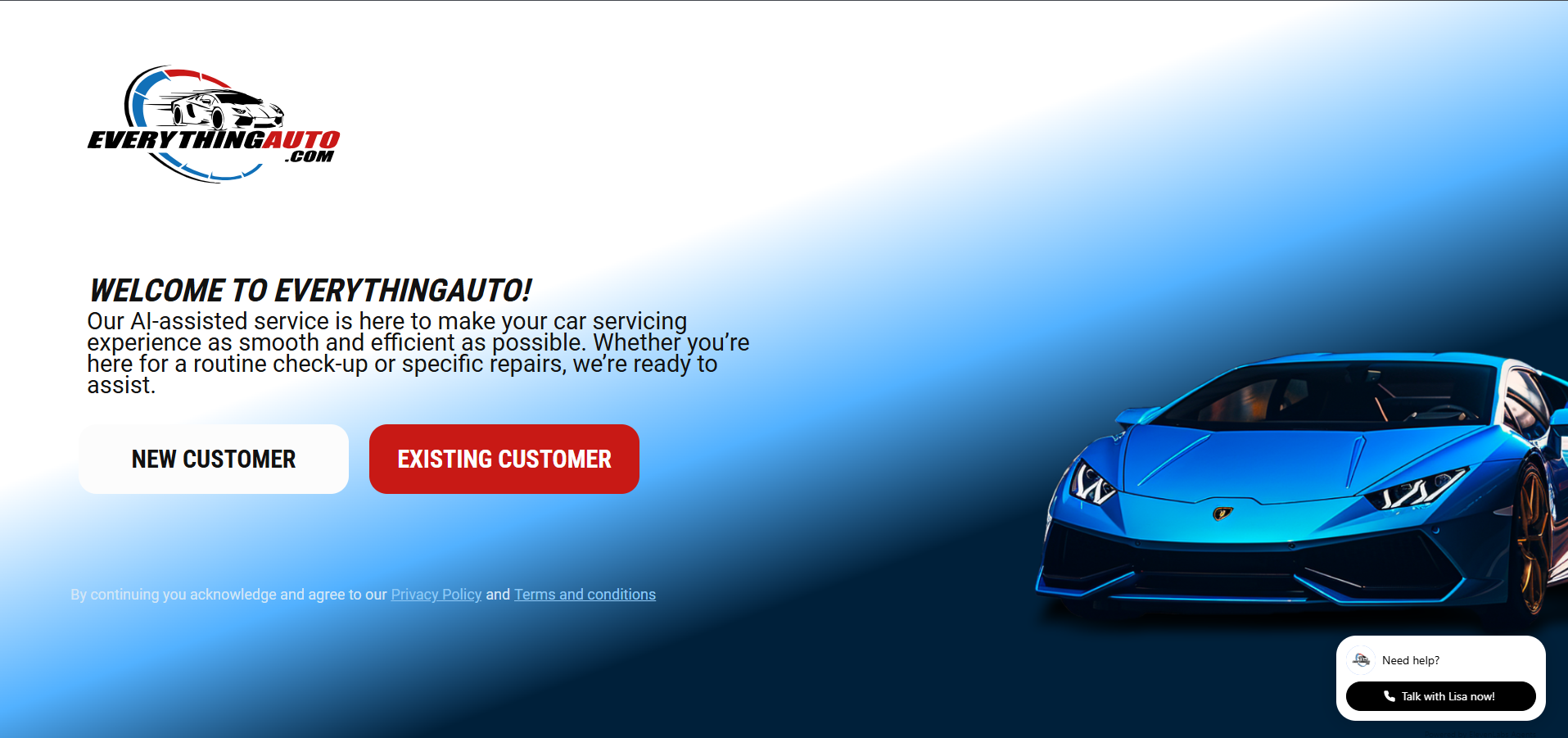
Everything Auto - AI-Powered Vehicle Service Management Platform
Web Development, AI Development, AI Chatbots

Everything Auto - AI-Powered Vehicle Service Management Platform

A comprehensive full-stack automotive service platform that revolutionizes vehicle service booking through intelligent AI chat and voice interactions. Built with enterprise-grade architecture, this application

NestJS Next.js React TypeScript OpenAI
Explore project
05 / THE AUTOMATION LAB

Less handoff. More flow.

Follow an inquiry through a connected operation. Select a step to see what the system does and where your team stays in control.

LEAD-TO-ACTION WORKFLOWIllustrative workflow · no external actions

Incoming lead

A permitted web form or customer message starts a workflow with an explicit purpose and a traceable request ID.

Select any node to inspect its role.
06 / ONE CONNECTED PRACTICE

Intelligence meets implementation.

AI is one part of the product. We build the interfaces, services and infrastructure that make it useful.

07 / THE TECHNOLOGY ECOSYSTEM

The right tools. A coherent architecture.

Technology choices follow the problem, the operating constraints and the people who will maintain the product.

Our approach to technology
AI / 01OpenAI
AI / 02Python
AI / 03TensorFlow
AI / 04PyTorch
08 / HOW WE BUILD

A clear path from idea to operation.

Small enough to inspect. Complete enough to use. A delivery process built around explicit decisions.

Explore our process
01 /

Understand

Map the people, business rules and current workflow. Define the problem before the technology.

02 /

Architect

Choose system boundaries, data ownership, integrations and the smallest useful release.

03 /

Prototype

Test the riskiest interaction or technical assumption with realistic inputs.

04 /

Engineer

Build coherent journeys in reviewable increments with maintainable source and meaningful checks.

05 /

Integrate

Connect APIs, identity, payments or business tools with controlled permissions and failure recovery.

06 /

Validate

Review user journeys, accessibility, security boundaries and performance on representative devices.

07 /

Launch

Prepare backups, release steps, monitoring and a rollback plan before the production cutover.

08 /

Improve

Use real feedback and observed behavior to refine the product and prioritize the next release.

09 / BUILT AROUND YOUR WORLD

Different industries. Specific possibilities.

Explore how intelligent software can support the workflows in your business.

Explore industries
10 / WHERE AI BECOMES USEFUL

Start with the work. Then add intelligence.

Choose a focused use case with accessible data, an accountable owner and an outcome you can evaluate.

11 / BUILT TO BE ACCOUNTABLE

Trust belongs in the architecture.

Clear permissions. Traceable decisions. Human review where it matters. We treat those as product requirements, alongside the interface and the model.

We define what the system is allowed to do, test against realistic examples and make failure states visible. Useful AI should make your operation easier to understand.

How we validate a system
12 / FIELD NOTES

Good systems start with good questions.

Practical thinking for the decisions before the build.

Read the journal
13 / BEFORE WE BEGIN

A few useful answers.

Have a different question? Bring it to the conversation.

Visit the FAQ hub
01

Where should we start with AI?

Start with one repeated workflow and a clear definition of a good outcome. Bring examples of the inputs, the current process and the exceptions. We can assess whether rules, retrieval, an agent or a conventional application is the most appropriate approach.

02

Can you work with our existing software?

Yes. We first inspect the existing code, APIs, data and operational constraints. We preserve useful functionality and propose staged changes where a full replacement would add unnecessary risk.

03

What is the difference between a chatbot and an AI agent?

A chatbot focuses on conversation. An agent can also select and invoke approved tools to complete a task. Agents need explicit permissions, validation, visibility and human review where actions have consequences.

04

Do we need to train our own model?

Often, no. Many applications are better served by a capable model, well-designed retrieval and reliable integrations. Training or fine-tuning is considered when suitable data and measurable evaluation justify it.

05

How do you handle private business data?

We agree what data can be used, which services may process it and who can access the result. The design can include scoped credentials, permission-aware retrieval, data minimization, retention rules and audit logs. The final controls depend on your requirements and selected providers.

06

How long will our project take?

The schedule depends on scope, integrations, data readiness and acceptance requirements. After discovery, we propose milestones and identify external dependencies. We do not promise a fixed timeline before understanding the work.

07

Can a person approve AI actions?

Yes. A review step can show the exact proposed action, destination and supporting evidence before execution. This is particularly useful for communications, record updates and other consequential changes.

08

Who owns the code and what happens after launch?

Ownership, licensing and handover are agreed in the project contract. A handover can include source code, deployment instructions and operating documentation. Support and ongoing improvement are scoped separately so responsibilities are clear.

THE NEXT CHAPTER

Your next system should think.

Bring the business problem. We’ll work through the architecture together.

Start a conversation